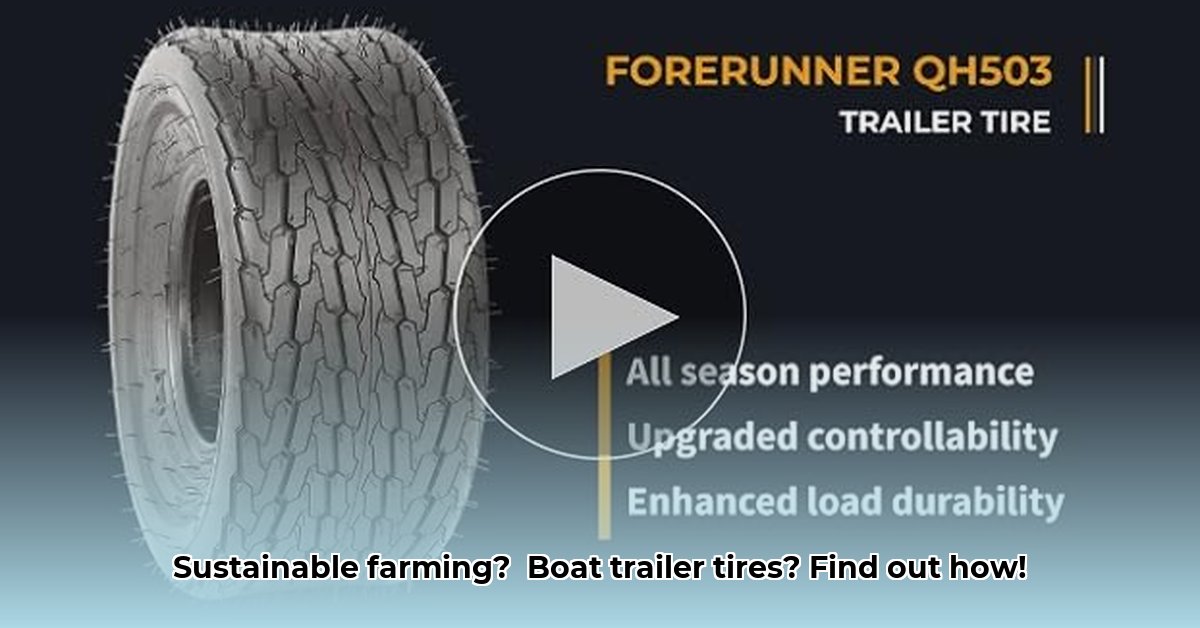
Tractor Supply Boat Trailer Tires: Embracing Sustainable Farming Practices
Sustainable agriculture extends beyond healthy crops; it encompasses every aspect of farm operations, including transportation. Hauling produce and equipment consumes significant fuel, generates emissions, and contributes to tire waste. However, strategic tire choices can significantly reduce your farm's environmental impact. This article explores how smarter tire selection and maintenance contribute to a greener, more efficient, and ultimately more profitable farming operation. For information on tire sizing, see this helpful guide on tire measurements.
Choosing the Right Tires: Optimizing Longevity and Fuel Efficiency
Tire selection is a long-term investment. Prioritize tires designed for durability and low rolling resistance. Low rolling resistance tires directly translate to lower fuel consumption, saving money and reducing your carbon footprint. This dual benefit positively impacts both your finances and the environment. Choosing tires built to last minimizes replacements, reducing waste in landfills.
But the impact goes beyond initial purchase. Maintaining proper tire pressure is paramount. Under-inflated tires increase fuel consumption, accelerate wear, and strain equipment. Regularly checking tire pressure using a reliable gauge, or even investing in a tire pressure monitoring system, ensures optimal performance and extends tire lifespan. This simple practice can lead to substantial cost savings over time. How much can you potentially save by implementing this single practice? Studies show significant reductions in fuel usage and tire wear for farmers who consistently monitor pressure.
Tire Materials: The Environmental Impact of Composition
Tire composition significantly affects environmental sustainability. Tires made from recycled materials reduce landfill waste. Moreover, ongoing research focuses on developing tires from renewable resources. While eco-friendly options might have a higher upfront cost, their extended lifespan often offsets this, offering long-term economic advantages. This makes them a compelling investment for the environmentally conscious farmer. Is the higher initial investment in sustainable materials justified? Many farmers find the environmental benefits outweigh the cost.
Beyond Tires: Holistic Sustainability Strategies
Sustainable farming extends beyond tire selection. Optimized route planning significantly reduces fuel consumption. Consolidating trips reduces travel time and associated emissions. Regular tire maintenance, including proper inflation and rotation, maximizes tire lifespan and minimizes waste. These seemingly small actions combine to create substantial savings and reduce the environmental footprint of your farm.
Responsible Tire Disposal: Closing the Loop
When your tires reach the end of their life, responsible disposal is crucial. Numerous tire companies and retailers offer recycling programs. These programs help divert waste from landfills and recover valuable materials. Contact your local waste management authority or tire retailer to identify available options in your area.
The Future of Sustainable Farm Transportation: Innovation and Policy
The agricultural landscape is constantly evolving, with advancements in sustainable tire technologies and growing governmental support for environmental initiatives. New tire materials and designs are continuously being developed, offering improved fuel efficiency and reduced environmental impact. Supporting businesses dedicated to sustainable practices reflects your commitment to environmental stewardship.
Actionable Steps for Sustainable Tire Management
Here’s a practical guide to implementing sustainable tire practices on your farm:
- Invest: Purchase high-quality, durable tires engineered for low rolling resistance.
- Maintain: Regularly check and adjust tire pressure to the manufacturer's recommendations, utilizing a reliable gauge.
- Optimize: Plan efficient routes to minimize driving distance and fuel consumption.
- Recycle: Participate in local tire recycling programs to ensure responsible disposal.
- Stay Updated: Keep informed on current tire technologies and evolving environmental regulations.
By adopting these sustainable practices, you can significantly minimize your farm's environmental footprint, creating a more sustainable and ultimately, more profitable business. The combination of cost savings and environmental responsibility creates a compelling case for implementing these strategies.